
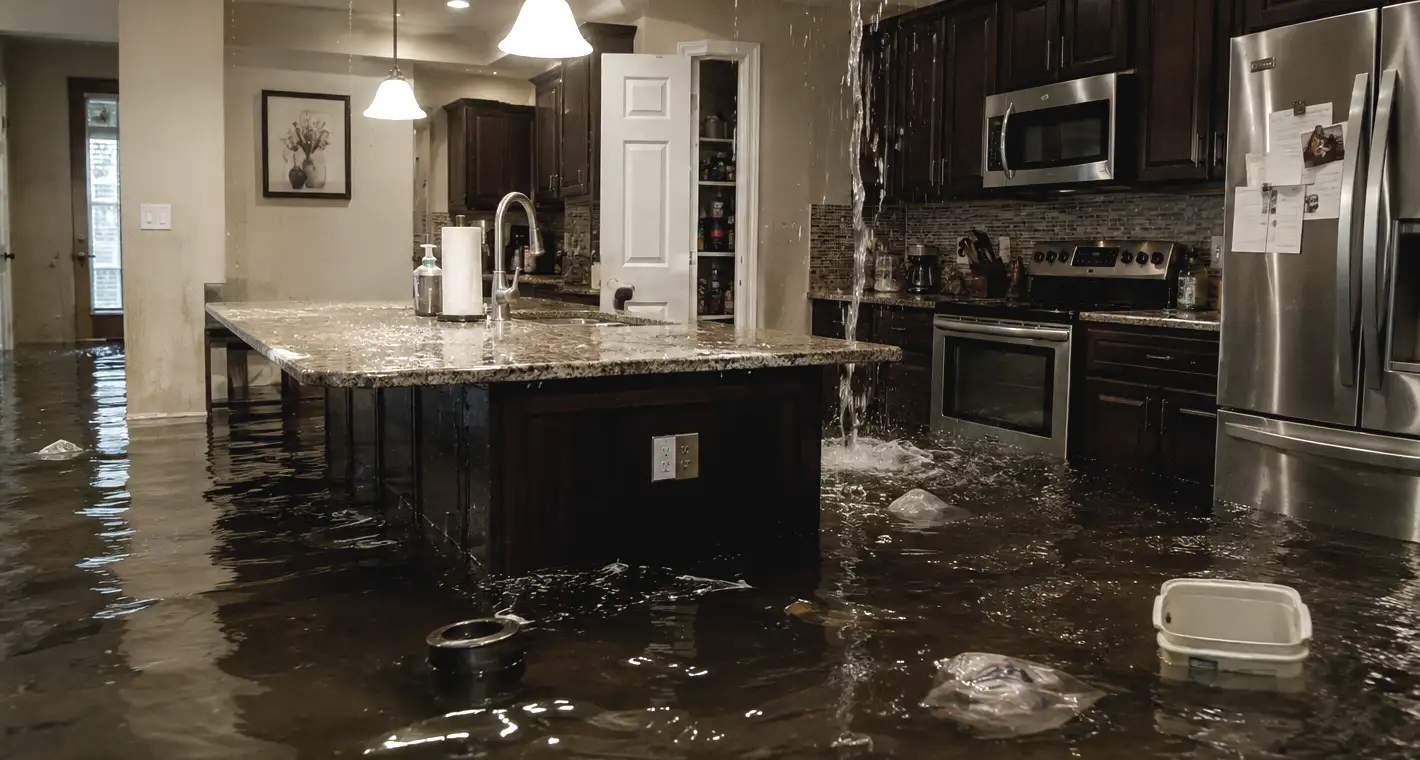
Extraction comes first
While standing water is present, everything else is slower and the affected area keeps growing. Bulk water removal is therefore the first step, using extraction equipment that draws water out of carpet and padding under vacuum rather than lifting it off the surface. On hard flooring the concern is what has already travelled beneath it, through seams in vinyl and laminate and into the subfloor.
How much can be extracted determines how long the drying phase runs. Every gallon pulled out mechanically is a gallon that does not have to be evaporated and then condensed out of the air, which is a far slower process.
What structural drying actually does
A building holds water in its materials, not only on its surfaces. Drywall, framing, subfloor, insulation, plaster and concrete all absorb it and release it slowly. Structural drying is the controlled process of getting those materials back to the moisture level that is normal for that building.
Air movers are positioned to break the thin layer of saturated, still air that forms against a wet surface. Until that layer is disturbed, evaporation nearly stops, which is why a wet floor in a closed room can stay wet for days. Dehumidifiers then remove the released moisture from the air. Without them, humidity in the space climbs and the moisture simply redeposits into materials that were dry, spreading the problem into rooms that were never affected.
Where water has entered a wall cavity, drying the visible surface is not enough. Cavities can be dried through directed airflow at the base of the wall, through small inspection openings, or by removing a band of drywall where the assembly cannot be reached any other way.
Measurement rather than guesswork
Moisture meters are used on the affected material and on the same material elsewhere in the house where it stayed dry. That second reading establishes the baseline for that particular structure, since normal varies between a 1920s Provo home with plaster and a 2015 Lehi home with modern drywall. Thermal imaging helps locate where water travelled, though it shows temperature difference rather than moisture and is used to direct the meter rather than replace it.
Readings are logged on each visit. Equipment stays in place until the affected readings return to the baseline. For a contained loss caught early, that commonly runs three to five days. Plaster, hardwood and concrete hold water considerably longer and can take a week or more.
What gets dried and what gets removed
Clean water caught quickly allows most of the structure to be dried in place. Carpet padding is usually removed regardless, because it holds a great deal of water and dries slowly enough that the carpet above it stays wet. Where water was contaminated, or where material has been saturated long enough that its integrity is affected, removal replaces drying. Saturated insulation is a common example, as it loses its function and holds water against framing.
Water extraction and drying by city
- ProvoZIP 84601, 84604, 84606
- OremZIP 84057, 84058, 84097
- LehiZIP 84043
- Eagle MountainZIP 84005
- Saratoga SpringsZIP 84045
- Spanish ForkZIP 84660
- Pleasant GroveZIP 84062
- SpringvilleZIP 84663
- American ForkZIP 84003
- PaysonZIP 84651
Frequently Asked Questions
- How is extraction different from mopping or shop-vacuuming?
- Truck-mounted and portable extraction units pull water out of carpet and padding under vacuum, rather than lifting it off the surface. Most of the water in a carpeted room is held in the padding beneath, and surface methods leave it there. A shop vacuum also has no way to address water that has already moved under the tack strip into the wall base.
- Why do dehumidifiers matter if the air movers are already running?
- Air movers move moisture out of materials and into the air. If nothing removes it from the air, humidity in the room climbs and that moisture redeposits into materials that were previously dry, including furniture and adjacent rooms. Dehumidification is what actually takes the water out of the building. The two run together, and neither works well alone.
- How is it decided what gets dried and what gets removed?
- It comes down to the type of water, how long the material was wet, and whether the material can return to normal moisture without deforming. Clean water caught early allows most structural material to be dried in place. Carpet padding is usually removed regardless because it holds water and dries slowly. Contaminated water shifts the balance heavily toward removal.
- How is drying confirmed rather than assumed?
- Moisture meters are used on affected materials and on unaffected material of the same type elsewhere in the building, which establishes what normal is for that structure. Readings are logged each day. Equipment stays until the affected readings match the normal baseline, which is why the schedule follows the readings rather than a fixed number of days.
- Can equipment be pulled early to save on cost?
- It can be, but it moves the problem rather than solving it. Material left above normal moisture continues to hold water inside the assembly, and that is the condition where microbial growth begins. Ending drying early is the most common reason a loss that appeared resolved returns as a secondary problem weeks later.